
For people who are quite reasonably uncomfortable with the prospect of traditional braces, Invisalign has become the obvious alternative. Yet nothing is without its complications and, for many new wearers, there is a concern over the discomfort and pain that some associate with wearing clear aligners.
The ability of Invisalign to straighten your smile while not being visible to the outside world is certainly a major selling point, but people who haven’t yet tried it will be keen to know: How long does Invisalign hurt? Will I be trading the visibility of braces for the discomfort of clear aligners? Here, we hope to answer these questions and others and provide some useful tips on reducing and stopping pain from Invisalign devices.
Invisalign Pain and Soreness: How Long Does It Last?
Invisalign pain or soreness typically lasts between one and two weeks, with the most intense discomfort usually subsiding within the first week. After this initial period, you’ll notice the pain tapering off significantly, and new aligner trays will generally cause less discomfort than the first set. There may be some discomfort for the duration of treatment, which you should be prepared for, but it certainly gets less the longer you wear the aligners.
It’s a reasonable question: how long does Invisalign hurt? If you’re going to make the decision to embrace a new way of aligning your teeth, you want to know what you’re going to be experiencing as you wait for it to work. And on the flip side of that, you’re prepared for a little pain; after all, your teeth are literally going to be pushed into the ideal alignment over time. Nothing like that can happen without a little pain. As long as it is a little, that’s a bargain we’re willing to make.
Tips to Relieve Invisalign Pain and Soreness

While the wearing of clear aligners can be uncomfortable, especially at the beginning, it is important that you persist with the treatment in order for it to work. Of course, this will have you asking how long does Invisalign hurt all the more in the early days, but the pain isn’t something you just have to deal with. Taking steps to manage the pain can and will make a difference.
- Over-the-counter pain relievers can be a beneficial option when the pain is at its worst. Their use should be limited, but can make a big difference early on.
- Cold compresses placed next to the mouth reduce inflammation and minimize the pain that can result from it.
- Orthodontic wax, formulated to reduce the pain of wearing braces, can have the same benefit for Invisalign wearers.
- In the early stages of Invisalign use, changing your eating habits to eat more soft foods can reduce the stress on teeth and gums, and limit pain.
Managing Discomfort: Invisalign FAQs
Everyone has some questions about how Invisalign will feel, and it is important to be honest about the answers. So let’s look at the most commonly asked questions in this regard, and get some genuine answers to help set your mind at ease.
Why does Invisalign hurt?
Invisalign aligners are designed to gently push your teeth into new positions, which causes initial sensitivity and soreness as your teeth adjust. The pain will start to fade away within the first week, however.
How much does Invisalign hurt?
Most users describe the initial Invisalign pain levels as “mild to moderate,” typically rating it between a 2 and a 6 on a 1-10 pain scale. While some discomfort is expected as your teeth adjust, it is rarely severe and significantly reduces quickly after the first few days. At the higher end, it’s certainly no picnic, but it’s nowhere near the top of the scale. And it will reduce quickly.
Could it persist for longer?
There might be some mild discomfort beyond the initial few weeks, but it will be more of an inconvenience than a genuine pain. The one caveat on this is that if you suffer from sensitive teeth or have existing gingivitis, the pain may be worse and last for longer. We’d recommend a conversation with your orthodontist covering these questions before you begin treatment.
The Truth About Invisalign Pain
It’s not uncommon to hear things about Invisalign which make you think twice about starting treatment. Some people may well have initial negative experiences, and some may even discontinue treatment early on. This could lead you to believe that it is a generally painful treatment you won’t be able to bear. So let’s get some clarity on the kind of pain you may experience and what is (and isn’t) normal with Invisalign trays.
- Slightly over half of people who use Invisalign report some pain in the early stages, which they categorize as moderate discomfort.
- Only you can really define your own experience of pain or discomfort. You may feel it is worse than “mild” or “moderate”, and if so, you may need to speak to an orthodontist. If the pain is unbearable, don’t try to bear it; there may be a solution.
- You should not experience bleeding or facial swelling as a result of Invisalign use. If this develops, you will need to consult an orthodontist for further advice. Don’t wait for it to subside.
There are levels of pain and discomfort. You likely already know the difference between the kind of pain you can expect and can tolerate, and something that is more acute. If your aligners fall into the latter group, to the point where you are thinking “how painful is Invisalign supposed to be?”, then it’s likely you need to see about tweaking your treatment.
When Will Invisalign Stop Hurting?
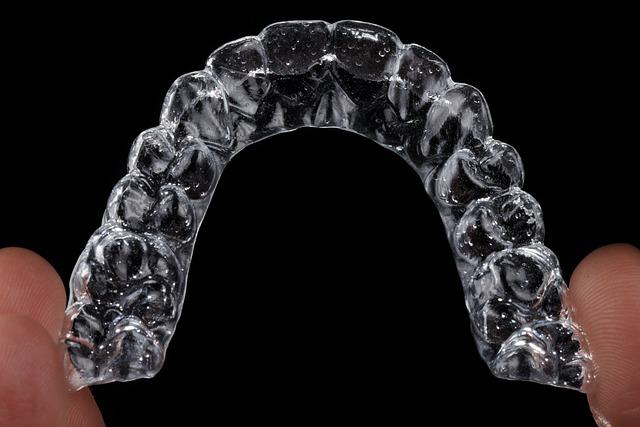
It is always difficult to answer questions about how bad a type of pain is, and how long it will last. The truth is that different people will answer the question “how long does it take Invisalign to stop hurting” differently. Giving an exact answer is not possible, and trying to do so can either make people more concerned, or give them unrealistic expectations. What we do see, time and again, is that people report relatively minimal pain which reduces in the first week of use, and by the end of a two-week period is barely there at all.
When you change trays, you may note that the pain comes back, but this usually is at a lower level than before, and it dissipates sooner. Naturally, all of these facts depend on your own experience to some extent. People differ when it comes to pain tolerance and the speed with which the treatment works, which can affect their experience with Invisalign. But if you are looking for a clear response to the question of how long does it take for pain to subside with clear aligners, then the best answer we can give is “it should start to reduce within the first week, and subside considerably by the end of the second”.
Coping with Invisalign Pain: What to Expect
It is normal to experience at least some discomfort when you begin using Invisalign. We mention this specifically because this is how things usually go. Not everybody does have this experience, but some have it worse than others. It is only right to prepare you for the possibility of some pain and to advise you on how much is normal. Assuming that you do experience pain with Invisalign, it is for the best that you are prepared for it mentally. If Invisalign treatment is working for you, the chances are that it’s going to hurt a bit.
If you can prepare yourself for this experience, then you’re likely to find that you can tolerate the pain, knowing that you will be seeing results from the treatment. Your orthodontist should be able to tell you how long you will need to use the treatment and what your pain experience should be like, but three things are more or less true for everyone:
- Yes, it will hurt more in the beginning.
- This should reduce a little within the first week, and then more as time goes on.
- There may be some discomfort for as long as treatment continues, but it will be minor.
Somewhere in the region of 18million people have used Invisalign to fix their smiles. One in four of those are teenagers. Bear that in mind; would so many people use it for an extended period if it was generally seriously painful?
Clear Aligners and Pain: A Comprehensive Guide
By now you should have a decent general idea of the answer to the question of how long does Invisalign hurt. The experience of clear aligners and pain differs for everyone, but you should be prepared for some moderate pain lasting between one and two weeks. It should then subside, and although there may be some discomfort for the duration of treatment, it should be barely noticeable. Of course, if it becomes too much, it is always worth speaking to an orthodontist to get more information and hopefully remedy the issue. Your experience may vary, but the discomfort should not be too great considering the rewards.
Speak with Our Experienced Professionals
As Blue Diamond Plus Invisalign providers, we can confidently say that we treat more Invisalign patients here at Dunegan & Cole Orthodontics than any other provider in the area. This means we’re used to providing treatment for a wide range of individuals. Book a free consultation with our team today to find out everything you could hope to know about Invisalign treatment.