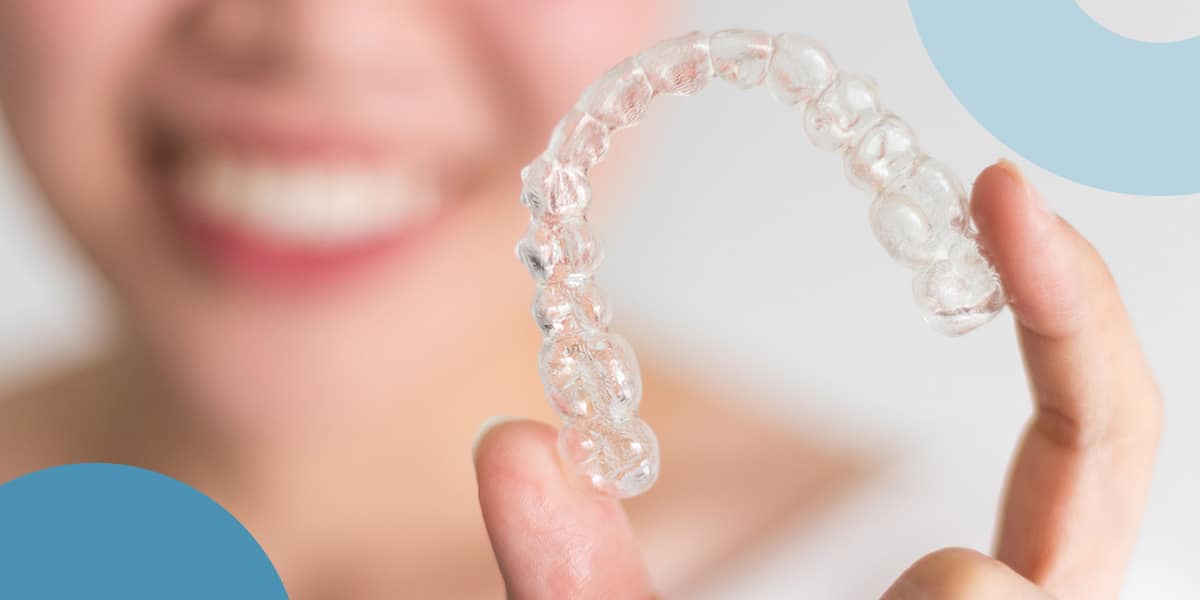
Starting Invisalign treatment is a big step toward the smile you want, but if you’ve noticed changes in how you sound when speaking or you’re wondering if treatment might affect your speech, you’re not alone. Speech deeply affects confidence, and concerns about a lisp or slurred pronunciation are completely valid.
While Invisalign can temporarily affect speech for some patients, the changes are manageable, well-understood by orthodontists and short-lived for most people. Understanding what to expect and how to adjust can help you move through treatment with confidence.
How Invisalign Can Temporarily Affect Your Speech
Invisalign can cause temporary speech difficulties, including speech alteration, slurring of words, lisping and nasality. This response is expected, clinically documented across multiple studies and not a reason to avoid treatment.
A lisp or slurred speech isn’t a sign that something is wrong with the aligners or with you as a patient. It’s simply a normal adjustment response. Understanding why this happens can help you feel more confident as your body adapts.
Why Does Invisalign Cause Speech Issues?
Speech issues from Invisalign treatment happen because your tongue is adapting to a new surface. The thin plastic trays slightly change where your tongue contacts your teeth and how air flows when you speak. Your brain and tongue rely on precise muscle memory built over years of speaking. Even a small change in that contact surface temporarily disrupts those automatic patterns.
The good news is that this recalibration happens automatically and unconsciously. Your brain adjusts on its own without you having to actively fix anything. Most patients find that their speech gradually returns to normal as their tongue adapts to the presence of the aligners. This process doesn’t require special exercises or interventions for most people.

Which Sounds Are Most Affected?
Clear aligners impact the pronunciation of certain sounds more than others. For instance, studies show the fricative consonants /s/ and /z/ are the most consistently affected, followed by /sh/, /th/ and /ch/. These sounds become difficult to pronounce because they require precise airflow control and tongue-to-tooth contact, both of which the aligners slightly disrupt. When your tongue expects to contact your teeth at a certain spot but instead encounters a foreign surface, the sound quality changes temporarily.
It’s worth noting that patients are almost always far more aware of these changes than the people around them. What feels obvious to you when you speak is often barely noticeable to others. So, if you’re feeling self-conscious about a mild lisp, remember that it’s likely way more apparent to you than to anyone else.
How Long Do Invisalign Speech Changes Last?
Invisalign speech issues and discomfort are brief side effects for most people. Most patients recover normal speech within seven to 14 days, while a smaller number take 30 to 60 days. A randomized clinical trial found that speech disturbances resolved within 30 days in most aligner patients, with no significant differences observed at 180 days. Several factors influence how quickly you adjust, including:
- How consistently you wear your aligners.
- How much you speak while wearing them.
- Individual biological variation.
What Happens When You Switch to a New Tray?
Each time you switch to a new aligner tray, you may notice a brief return of mild speech changes as your tongue recalibrates to the slightly different contour of the new tray. Most patients find that this small adjustment resolves more quickly with each new tray, as your tongue becomes more adaptable over the course of treatment.
Wearing your aligners consistently can shorten this adjustment window. The more time your tongue spends with the aligners in place, the faster it learns to compensate.
How to Adjust to Invisalign Speech Changes Faster
Here are some practical strategies to help you adjust faster:
- Practice reading aloud: Reading aloud trains your muscle memory. Read to yourself, talk in front of a mirror or have conversations with friends and family. The more you speak while wearing your aligners, the faster your tongue adapts to the new surface.
- Wear your aligners as recommended: Patients who keep their aligners in for the recommended 22 hours per day tend to adapt faster than those who remove them frequently. Consistent wear helps your tongue, mouth muscles and airflow patterns adjust simultaneously. It also helps accelerate your Invisalign treatment overall.
- Stay hydrated: Dry mouth can amplify speech issues and make a lisp more pronounced. Drinking water throughout the day keeps your mouth lubricated and helps you articulate more clearly.
- Record yourself speaking: Hearing how you actually sound can be enlightening. Many patients are surprised to find their speech sounds better than they thought. Recording yourself also helps you identify specific sounds that need more practice.
- Be patient and trust the process: Your speech will naturally improve without conscious effort as your brain adjusts to the aligners. Each time you remove your aligners, you interrupt this adjustment period, so keep them in place even when you’re feeling self-conscious.
When to Talk to Your Orthodontist About Speech Issues
Most speech changes resolve on their own within a few weeks, but there are times when reaching out to your orthodontist is the best course of action. Your orthodontist is your partner in treatment, not a last resort, and they want to know if something feels off. Consider scheduling a check-in if you notice any of the following:
- Speech challenges persist beyond eight weeks: If you’ve been wearing your aligners consistently for several weeks and haven’t noticed any improvement in your speech, it’s worth having your orthodontist evaluate the fit and alignment of your trays.
- Aligners feel loose, uncomfortable or misaligned: Ill-fitting aligners can contribute to prolonged speech issues. If your trays don’t sit properly, your orthodontist can make adjustments to ensure a proper fit.
- Speech issues worsen with each new tray: If speech changes feel more pronounced with a new tray than they did with previous ones, rather than improving over time, this could indicate a fit issue that needs attention.
- Pain when speaking: Normal adjustment soreness is expected, but if you’re experiencing sharp pain or discomfort when speaking, reach out to your orthodontist.
Tools like Invisalign Lens let you monitor your progress remotely and flag concerns without always needing to come in for an appointment. Speech issues caused by Invisalign are often temporary. If they persist longer than expected, your orthodontist can help address any issues.
Start Your Invisalign Journey With Dunegan & Cole Orthodontics
Temporary speech changes are a normal part of adjusting to Invisalign treatment, and with the right guidance, you can navigate them with confidence. At Dunegan & Cole Orthodontics, our team understands the concerns that come with starting treatment, and we’re here to support you every step of the way.
As one of the top 1% Diamond Plus Invisalign providers nationwide, we bring expertise and personalized care to every patient. We offer options for all ages, whether you’re exploring Invisalign First for children, Invisalign Teen or adult Invisalign treatment.
Schedule your free consultation today.